
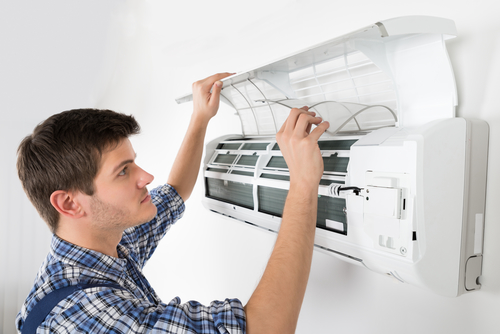
Your central air conditioner is probably one of the most essential appliances in your home, especially if you live in an unusually hot region of the Sunshine State. Most Californians can’t make it through a summer without a functional and well-maintained central air conditioner—not without losing their minds, anyway. However, any central air conditioner is a complex apparatus with diverse needs that you must meet if you want your AC to keep providing you with cool comfort. One of the most common problems we hear about is that a central air conditioner is leaking water, and the owner doesn’t know what to do.
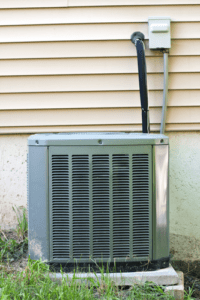 The question most owners have when they see that their central air conditioner is leaking water is: “Should I care?” after all, a puddle or two of water is pretty harmless—at least, that’s a common assumption. Not every water leak should cause you to panic, but a central air conditioner that is leaking water can be cause for concern. In the following guide, we’ll tell you why air conditioners commonly spring leaks, what that could mean for you as an owner, and how you can take steps to prevent or solve this problem in the future.
First Things First: Why is My Central Air Conditioner Leaking Water?
There are several possible causes of the water leaking from your central air conditioning unit, so it’s important to know exactly what the root of the problem is before you proceed. Here are three common causes of water leakage from central AC units:
1) No air is making its way to the evaporator coil. Circulation issues in the system can make it impossible for sufficient air to reach the coil in the evaporator. Without warm air passing over the evaporator coil, it will soon freeze. However, the ice forming on the outside of the coil will eventually melt. When it does, it will travel down a path into your drain pan and eventually cause it to overflow, spilling out onto the floor near your indoor unit.
2) Your condensate drain pan is broken. The pan under your condensate drain is meant to collect water that naturally forms as the result of condensation while your air conditioner is running. However, if there is a hole or crack in the bottom of your drain pan, this water will leak onto the floor around your system.
3) A blockage in your condensate drain line. Even if your pan is in excellent condition, a blockage in your drain line itself can cause water to back up and collect in the pan, eventually spilling over the sides.
What Are the Consequences of Leaking Water?
The water leaking from your air conditioner may not constitute much of a hazard in and of itself unless it can reach electrical equipment or cause a viable slipping hazard. However, the problems that cause water to leak in the first place can have other consequences besides a few puddles. Here are a few:
1) If the evaporator coil is frozen, the compressor will be working harder to compensate. Left unchecked, this problem can cause your compressor to fail. Since new compressors typically cost up to $1800, you should always treat a frozen evaporator coil as a cause for concern.
2) A frozen coil itself will likely require replacement, primarily if you do not address it immediately. Evaporator coils start at $650, and high-quality components can cost as much as $1200.
3) Not all the water that leaks out of a broken or backed up condensate drain may be visible. In fact, some of it is likely to collect in tight places not easily noticed by the naked eye. If this occurs, there is a significant risk of mold growing in your home near where the leak occurs.
What to Do About a Water Leak?
If you notice water leaking from your air conditioner, it is best to stop using the unit and call for professional service as soon as possible. A licensed HVAC technician will be able to identify the cause of the leak and address it so that it doesn’t cause further damage to your system.

How to Prevent Future Water Leaks?
There are several things you can do to minimize the risk of water leaking from your AC in the future. One of the easiest is to replace the filters once a month to ensure that air can keep circulating correctly throughout the system. Fresh filters help prevent blockages from occuring in your ductwork, which will ensure that air can always reach the evaporator coil. It is also worth having the ducts cleaned every 2-5 years by your service technician, to eliminate the possibility of blockages occurring through other means.
Finally, check the drain pan and drain lines every so often to ensure that they are functioning correctly. Doing so will keep you from being surprised by a nasty leak when you least expect it.
When your central air conditioner is leaking water, find out why. Use the knowledge in this guide to identify the causes of your leak, contact professionals who can help you solve it, and ensure that it never happens again.
Check with us here at Valley Comfort Heating and Air, our customers love our attention to detail and our friendly, affordable service. (707) 539-4533