
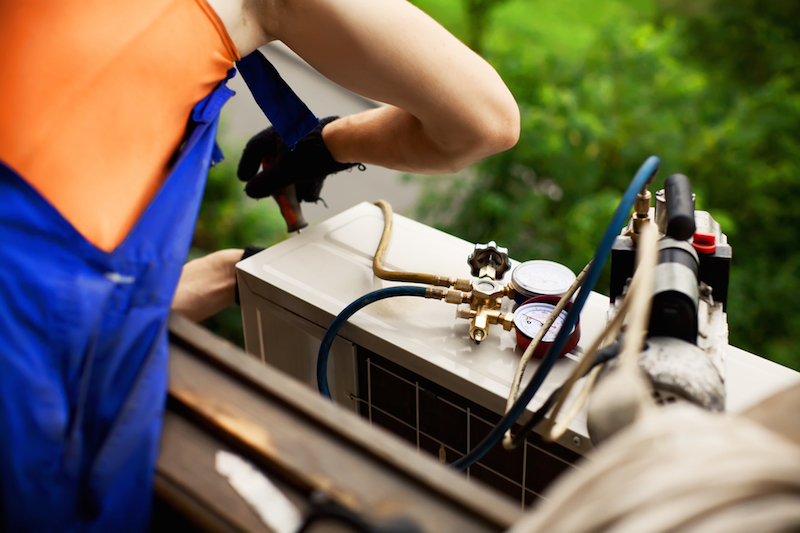
Perhaps you’ve recently installed a new HVAC system and want to make sure that it continues running efficiently for the foreseeable future. Alternatively, maybe you’re just looking for a way to cut down on your monthly energy bills. Either way, whether you are dealing with a residential HVAC system or a commercial HVAC installation, there are things you can do to keep your HVAC system running optimally. Read on to learn more about these strategies.


Conduct regular residential or commercial HVAC  service maintenance checks

commercial HVAC serviceThe easiest way to prevent dips in your HVAC performance is to schedule regular checkups and servicing. HVAC experts recommend annual inspections at minimum, both for residential and commercial HVAC service. It’s not a bad idea to have your air conditioner inspected and serviced in the late winter/early spring and to have your furnace checked in the early fall. Making sure these systems are ready for the seasonal challenges they will soon face will avoid a scramble a few weeks later if and when you determine that your system needs attention. Your HVAC technicians will inspect your system for problems, recommend repairs and replacements where necessary, and let you know the general health of your HVAC system.


Check and replace air filters

Your furnace filters are designed to protect the blower fans from dirt, dust, and other debris that might be in your ducts. By catching these impurities, the filter is playing a pivotal role in ensuring the longevity and performance of your HVAC system. It also prevents those contaminants from being recirculated over and over again, which raises the quality of your interior air quality. The cost of this protection is that your filters get clogged and dirty over time. Replacing them regularly—usually every three months—will lead to better results from your HVAC system.


Clean your ducts

As part of your furnace and air conditioner checkups, your HVAC technician should check your ducts and let you know if they need cleaning. Dirty ductwork not only leads to poor quality air being recirculated throughout your home or business, but also impedes airflow. The more difficult it is for your HVAC system to get air through the ducts, the harder it is going to work and the more money you are going to spend on your energy bills. A routine duct cleaning will ensure a healthier interior environment while also helping the performance of your HVAC system as a whole.


Use programmable thermostats

These days, programmable thermostats—and even smart thermostats—are the norm. If you don’t have at least programmable thermostats in your home or business, it’s time for an upgrade. Being able to program your thermostat lets you drop or raise the temperature at different times of day, which can help you make the most of your energy bill. You don’t need to heat or cool offices as much during hours when no one is around, for instance, which means you can save a lot of energy overnight or on weekends. At home, during the winter, you can let the temperature drop a few degrees cooler overnight while everyone is sleeping. If you need help planning a thermostat schedule that will maximize your system efficiency, ask your technician next time you have a residential or commercial HVAC service.


Check windows and installation

Is your home or office designed with energy efficiency in mind? Most newer buildings are, but if your building is older, it might be worth checking your windows, doors, insulation, or other factors that might be causing heat transfer. Windows can lose a lot of heat during the winter—and let a lot in during the summer—and poorly insulated buildings are just a consistent battle to keep temperate and comfortable. Investing a bit in energy-efficient improvements will mean that your HVAC system doesn’t need to work as hard to keep a consistent temperature, which will save you money in the long run and expand the lifespan of your system components.


Contact us for your AC Furnace Repair

Know the signs of common problems

The above strategies will hopefully prevent any problems from developing with your HVAC system. Still, it’s good to know how to spot common problems with air conditioning or heat systems. Monitor your energy bills and watch for inexplicable increases in usage and bill amount. Take note immediately if your system is making odd noises. Look out for dips in airflow. Feel around for lukewarm air coming out of your vents, rather than crisp cool air or pleasantly warm air. Any of these issues could be symptoms of a problem and are worth a call to your HVAC technician.

If you do think something is wrong with your system, don’t hesitate to call for a residential or commercial HVAC service. It is always better to be safe than sorry with HVAC matters, and calling for a service might save you money or help you avoid a complete system breakdown.

It’s that season of the year again – birds are chirping, flowers are blooming, the sun is shining, skies are blue and is time to spend more time in your yard. While taking care of your lawn, take some time to inspect your outdoor air conditioning unit with these eight air conditioner repair tips.

Although most of the air conditioner repair must be carried out by qualified personnel, there are those simple repairs you can handle all by yourself.
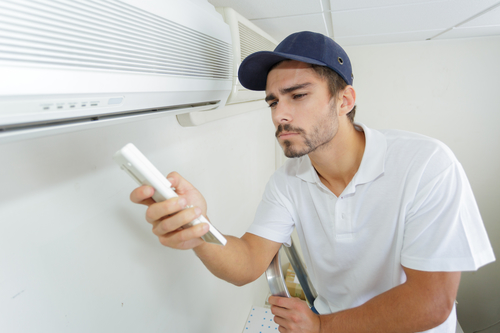
Air Conditioner Repair man

Air Conditioner Repair Check List

1. Check your breaker.

If your condenser is not working, check if the unit is plugged in. If so, check for a tripped circuit or blown fuse breaker. Restore your power and see if it starts, if it doesn’t replace the fuse.

If the breaker keeps on tripping, most likely it is short in the system – in the fan motor, capacitor, or the compressor. You’ll need an expert to trace and fix this air conditioner repair.


2. Examine your thermostat.

Your thermostat should always be 3 degrees below ambient room temperature if this not the case lower its temperature by 5 degrees for it to cool.

Improper placement of your thermostat can wreak havoc on your comfort. Does your AC keep shutting off? Then your unit might be near a hot oven, too close to a register, or in direct sun.

Try relocating it before you think of calling air conditioner repair expert.


3. Change your filters

Airflow is always paramount to comfort. If you have blocked or dirty air condenser, it may cause a problem in airflow.

Change your filter. Depending on the number of people living in the house, the quality of the filter and if there are pets, consider changing your filter every 30-60 days.


4. Spring tune-up

Has there been a spike in your operating cost? This signals an inefficient operation. The most likely culprit could be a choked condensing coil. The coil has many fins that can accumulate debris and dust.

You should call an expert for a spring tune-up since this air conditioner repair is complex.


5. Fan

Are you experiencing weird noises during operation and startup? Ticking, Buzzing, or Rattling? The good news is that it might be just a loose screw. The bad news it could be caused by a bent fan blade (outdoors) or a bum blower motor (indoors).

If you are lucky, a simple lubricating here and tightening there will fix the problem. If not, you might need a new fan blade or fan motor in your air conditioner repair.


6. Tube

Have you noticed a puddle of water next to your furnace? Accumulation of water signals a disconnection or a blockage in the tube.

Inspect the tubes for disconnections, clogs, and crimps. Also, if you notice water flowing into a sump basin, make sure that the sump pump is in good working condition.


7. Insulating sleeves

Two copper refrigerant lines, covered by insulating sleeves connect outdoor unit and indoor system. If you feel as if the air coming out of the registers is not cold as it should be:

  • Make sure the refrigerant lines are covered with insulating sleeves, also
  • You may need to recharge refrigerant.


8. Compressor fail

Has your AC failed to kick on at all? If your compressor fails, then your units won’t start until you have over whole air conditioner repair. The only fix for this is to replace the equipment, which includes new Freon, various small parts, and labor to carry out this air conditioner repair.