Do you need HVAC service right away? Click Here
While we tend to think of asbestos as a thing of the past, the unfortunate truth is that it’s still often found in older homes and commercial buildings. In fact, while the US government has placed heavy restrictions on the use and manufacture of asbestos, it’s still not fully illegal, so manufacturers still use it to make some insulation, gaskets, roofing materials, and other common building materials. The EPA attempted to ban asbestos in 1989 with the Asbestos Ban and Phase-Out Rule, but the ban was overturned in 1991 after fierce pushback from the asbestos industry.
The result is that asbestos, while rare, is still present in some homes and businesses, especially ones that were built before the 1980s. Asbestos is dangerous everywhere, but it’s especially hazardous if it makes its way into your HVAC system. Before the ’80s, it was commonly used as insulation for heating ducts, and many old houses still have asbestos insulation around the ducts. If any of the fibers make it into the ducts themselves, they can get into the air and potentially cause dangerous health problems for you and your family. If you discover asbestos anywhere in or near your HVAC system, you should contact a professional to handle the abatement as soon as possible.

What is Asbestos?
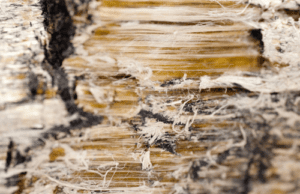
Asbestos is a naturally-occurring fibrous mineral found all over the world in rock deposits. While it might look like a regular rock, asbestos is actually made up of long, fibrous crystals that look a little like a brush when it’s been mined. These fibers are extremely thin and flexible but are also highly resistant to heat, corrosion, and electricity. These qualities make asbestos useful as a building material, but, as we would later discover, also make it dangerous to be around.
While asbestos has been found in clay pots dating back to the Stone Age, it was the Greeks who first documented its use. The word “asbestos” is a transliteration of an ancient Greek word that means “unquenchable” or “inextinguishable,” referring to its early use as a material for wicks that would never burn up. The Greeks also used asbestos to make other flexible objects, like napkins or tablecloths, that they wanted to be fire-resistant. Ancient people also used asbestos to make funeral shrouds for their kings, to keep their ashes separate from the wood ashes after cremation.
Learn More About HVAC and Asbestos, Subscribe To Our Blog!
In the 19th century, asbestos was the target of large-scale industrial mining for the first time. Though asbestos-laced fireproof clothes and napkins failed to sell, business owners soon realized how useful the mineral could be for construction, and by the early 1900s, the vast majority of homes were built with asbestos-coated bricks, concrete, insulation, and other materials.
The chemical qualities of asbestos make it perfect for use in construction and other industries. Asbestos fibers are flexible enough to be woven into clothes or fabric but are stronger than cotton, rayon, or nylon. Asbestos is completely non-flammable and non-combustible and has a melting point of 1600 degrees. In the early 20th century, asbestos was used in specialized gear to protect firefighters and was also used in household goods like toasters, ovens, and ironing board covers.
However, in the 1890s, it was discovered that asbestos dust was potentially dangerous if inhaled. Large-scale studies were performed in the 1930s making a connection between asbestos exposure and long-term health effects, but it wasn’t until the 1970s that the US government began to act. In fact, court documents have been uncovered that prove government officials knew about the health risks of asbestos for almost 40 years before finally making that information public. For that reason, asbestos continued to be used in construction until the 1980s.
The Risks of Asbestos
While the thin, flexible fibers of asbestos make it perfect for manufacturing, they also contribute to making asbestos exposure so dangerous. Each fiber is made up of microscopic “fibrils.” When air is blown over the fibers or something brushes across them, these fibrils are released into the air in a cloud of dust. If inhaled, the fibers in asbestos dust can become permanently lodged in your lungs. Over a period of years, the asbestos fibers cause inflammation, scarring, and even genetic damage to your lung tissue. Because the symptoms of asbestos exposure can take decades to appear, you may not know that it’s happening until it’s too late. That’s why it’s so important to test your home and place of business for asbestos as soon as you move in.
Asbestosis
The most common condition caused by asbestos is asbestosis, which refers to scarring and inflammation of the lungs caused by inhaled asbestos fibers. When the fibers are inhaled, they make their way to the air sacs and embed themselves in the tissue there. This causes irritation and your lungs can become inflamed due to the autoimmune response to the fibers. This is generally chronic, and the inflammation will gradually increase over time as your body tries to destroy the asbestos fibers.
As asbestosis progresses, scarring in the tissue of your lungs will cause the walls to thicken, preventing oxygen from crossing into your bloodstream. This causes the patient to experience shortness of breath, the most common symptom of asbestosis. Typically, a doctor can detect asbestosis by listening to your lungs with a stethoscope. If the condition is detected, the only treatment is oxygen therapy and immediately stopping all exposure to make sure it doesn’t get worse.
Mesothelioma
You’ve probably heard the word “mesothelioma” used before in connection to asbestos exposure. It refers to cancer in the lining of your lungs, caused almost exclusively by asbestos. Current evidence suggests that the asbestos fibers themselves are carcinogenic, and can cause a tumor to grow on your lungs.
Unfortunately, mesothelioma is extremely resistant to radiation, making chemotherapy ineffective in most cases. Because the tumor most commonly grows on lung tissue, surgery is usually too risky. Doctors are still trying to discover more effective treatments for mesothelioma, but, for now, your best bet is to avoid any exposure to asbestos as much as you can.
Detecting Asbestos
When moving into a new house or place of business, one of the first things you should do is check for asbestos, especially if the building was built before the ’80s. When it comes to HVAC, asbestos can be found in the ducts themselves, the insulation around them, and in duct dampeners wrapped around any corners or turns in the ductwork. As a general rule, if you think the ducts in your home were added before the ’80s, just assume they have asbestos. It was so common in building materials that you can safely bet that anything installed before the ’80s has asbestos, no matter what it is.
When looking for asbestos, be on the lookout for any white, paper-like substance wrapped around the ducts. This insulation is the most common source of asbestos in HVAC systems. We recommend hiring a professional to look around and collect samples just to be safe, but your level of risk will depend on the age of the house and the HVAC system. Here’s a list of HVAC manufacturers that used to include asbestos in their products:
- W.R. Grace Corporation
- J-M Manufacturing Co.
- Georgia-Pacific
- Duro Dyne
- H.B. Fuller
- Turner & Newall
- Johns Manville
- Rich Tex Inc.
- Celotex
- Grant Wilson
- Nicolet
If your ducts were built by any of these companies, it’s worth bringing someone in to check for asbestos. It’s better to be safe than sorry.
Air Quality Tests
If you’re concerned about the presence of asbestos in your home or business, you can have the air quality tested. When testing for asbestos, an air quality professional will use a process called Transmission Electron Microscopy to capture and detect even the finest asbestos fibers in the air. Gathering the dust and sampling the air can take up to eight hours, but it’s important to be thorough and make sure you’re testing as fully as possible. If even a little asbestos is detected, you should immediately leave the building and stay with a friend or neighbor until the asbestos abatement process has been completed. There is no “safe” level of asbestos exposure, and living in a home with asbestos for even a little while can cause damage to your lungs.
If your air quality test comes back as “good” but you think you’ve discovered asbestos in your HVAC system, you should call an HVAC expert immediately. Even if the fibers aren’t currently in your airflow, the slightest breeze or someone brushing against them can release them. Again, there’s no such thing as a “safe” exposure to asbestos, so making sure you stay on top of detection is extremely important. If you suspect you may have found asbestos in your home, you can collect a sample and have it tested by a lab. However, we recommend bringing in a professional to help you take samples just to be safe. An asbestos inspector can also check other parts of your home to make sure there isn’t asbestos elsewhere as well.
How Asbestos Abatement Works
Generally, asbestos abatement will mean removing the asbestos from your home entirely. For HVAC, that generally involves removing the insulation around the ducts, although sometimes replacing the ducts themselves is required. Asbestos can also sometimes be found in duct tape used to keep a tight seal when the ducts are connected together. This process can be both lengthy and costly, but it’s necessary to prevent health risks to you and your family. When abating asbestos, any professional will follow the same few steps:
Creating a work plan – Before starting work, a contractor or other abatement worker will first come up with a plan. The plan should detail any and all work that will be done, as well as all the relevant codes and laws the contractor has to obey. Make sure to take a look at the plan before work begins so you’re not surprised. Asbestos abatement can sometimes require some demolition, so it’s good to know what to expect going in.
Setting up the work area – First, any occupants of the building will have to leave until the process is complete. That means you, your family, and any pets you might have. The process can take some time, so make sure you have somewhere to stay. Then, the contractor will seal off any a
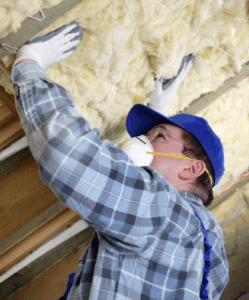
ir ducts, turn off the HVAC system, and cover all doors and windows with plastic and filtration systems. If the work is isolated to a single area, like the attic, that area will be sealed off from the rest of the building.
Removing material – Once the area has been sealed off, the contractor will use tools to remove any materials in your home that contain asbestos. Because asbestos coating generally can’t be removed from another material, the entire piece has to be removed. Any asbestos-containing materials will be placed in special disposal bags and removed through a decontamination unit.
HEPA vacuuming and clean-up – Once the work has been completed, special vacuum units are set up to remove all traces of asbestos from the air. Everything inside the work area is thoroughly cleaned and vacuumed to make sure no asbestos is left behind, and then the work site will be taken down. In commercial buildings, the contractor usually conducts a few more tests and inspections before the building is re-opened, but that’s not always done for homes. Upon final completion, the building owner receives a full report including every test and all the work the contractor did. You should hang on to this report, especially if you plan on ever selling your house.
How Much Does Asbestos Abatement Cost?
The cost of the abatement can vary wildly depending on what needs to be removed. Generally, the inspections both before and after work will cost between $300 and $600 each, depending on the size of the building. Once work begins, the abatement process can cost anywhere from $2,000 to $15,000 for an average-sized house. The price will depend heavily on which materials need to be removed. Removing asbestos-treated pipes and ducts, for example, will run you between $2,000 and $4,000, while stripping asbestos siding can cost up to $15,000. All told the cost will be between about $3,000 and $20,000. That’s a highly variable number, but there’s really no way to know until the inspection has been done.
Asbestos Repair vs Removal
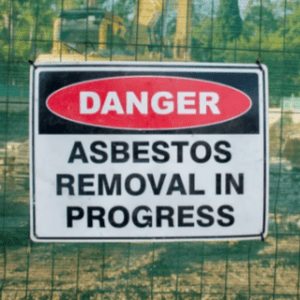 If full asbestos removal isn’t possible, or if the cost is prohibitive, you can also consider a process called asbestos encapsulation. With this process, any materials containing asbestos will be covered instead of being removed completely. Encapsulation is less expensive than full removal, which makes it an attractive choice for homeowners trying to save a little money on their asbestos treatment. If you choose this method, high-quality sealant or concrete is sprayed on the asbestos, covering it completely and preventing the fibers from being released into the air. Encapsulation is just as effective as full removal, but it comes with its own issues.
If you encapsulate your asbestos-covered materials, the asbestos doesn’t go away, it’s still there underneath the sealant. That means you’ll have to re-do the entire process every once in a while since the sealant can break down over time. Encapsulation might be less expensive in the short term, but the costs can start to add up if you’re living in the same house for a long time. This can also be a problem if you want to sell your house. Many buyers would prefer a house with no asbestos at all, and the encapsulation can become a sticking point for a potential sale.
We recommend full abatement for HVAC systems rather than encapsulation. Not only is removal a safer, more permanent solution, but encapsulation can make accessing your ducts difficult when you need to repair them. If there’s one place in your home that you really don’t want asbestos present, it’s in your HVAC system. Ducts travel all through your house, so any asbestos particles can be spread to every room if they come free. For the sake of your peace of mind, we strongly recommend going through a full asbestos abatement if you discover asbestos anywhere in your HVAC system – even if your air quality tests as “good.”
Tips on Hiring an Asbestos Abatement Contractor
Like with any trade professional, hiring an asbestos contractor can seem a little daunting. However, it’s important that you find the right one to handle your home or place of business. Here are a few things we suggest considering when you’re making your decision:
Licensing – The first thing you should do when speaking to a contractor is ask if they’re licensed to perform asbestos-related work by the state. In California, a licensed contractor has to undergo asbestos training with the Division of Occupational Safety and Health (DOSH), as well as have at least four years of experience working with asbestos. You don’t legally have to hire a licensed contractor for your work, but we highly recommend it, especially when you’re dealing with something as dangerous as asbestos.
Cost – If you’ve already had your home or business inspected for asbestos and you know which areas need to be worked on, you should have all the information you need to get an accurate pricing estimate. An experienced and capable contractor should be able to look at the inspection record and the size of your house and get a general idea of what the cost will be. If a prospective contractor is unwilling to be up-front about the cost, that can be a red flag.
References – Any reputable contractor, asbestos-related or otherwise, should be able to present you with a list of references if requested. Select at least three references and contact them. Ask if they’re satisfied with the work they received as well as the cost. If a contractor is unable to offer references, they’re likely lacking in experience. That doesn’t necessarily mean they’ll do a bad job, but it’s usually a better idea to look for someone experienced.
If you have the time, we recommend getting bids from more than one contractor so you can compare. Make sure to describe the work in the same terms each time so it’s easier to compare estimates, and let each contractor take a look at your building if they want to. You’ll get a much more accurate bid if the contractor can see the site for themselves. We also recommend getting a copy of a written work plan from each contractor so you have the full picture. Along with the work plan, request copies of their California asbestos contractor’s license, certifications for any supervisors or workers who will be on the site, and, if the process has already begun, any test results or permits acquired by the contractor.
Which Option is Right For You?
If you detect any sign of asbestos, even if the air quality test comes back alright, we recommend getting your home inspected. If the inspector finds asbestos in your HVAC system, we do recommend a full abatement, although encapsulation can be effective in certain situations as well. Encapsulation can be tricky with HVAC systems since the sealant makes accessing the ducts difficult when the time comes to repair them. HVAC systems are also vulnerable spots for asbestos since the system can blow the asbestos fibers all through your house. Despite the known link between asbestos and conditions like asbestosis and mesothelioma, asbestos is still legal to manufacture and use in the United States, which means it can pop up here and there in older houses. A full inspection, while a little pricey, is the best way to make sure there isn’t any asbestos lurking in your attic or in the ducts.
If you have any questions about asbestos or other HVAC-related concerns, you can contact us or give us a call at (707) 539-4533. We’ve been serving Sonoma, Napa, and Marin counties for years now, and we think you’ll be satisfied with our superior customer service and workmanship.